Category Archives: grammar
-
Righting Wrongs, Writing Wrong, and the Power of Mistakes
Leave a commentMarch 18, 2019 by libroshombre

Martial arts maestro Bruce Lee wrote in his book, “Striking Thoughts,” that “Mistakes are always forgivable, if one has the …
Continue reading -
Saints, Milk, and Commas
Leave a commentMarch 18, 2019 by libroshombre

You want to keep your Saint Isidores straight when you’re talking about commas. Or is it “Saints Isidore”? Either way, …
Continue reading -
Drunk Persians, Political Correctness, and Deceptive Advertising
Leave a commentNovember 23, 2016 by libroshombre

Herodotus reported that the ancient Persians preferred getting drunk when deciding something important, and the next day, after sobering …
Continue reading -
Scrabble, Persnicketiness, and the 5-Second Rule
Leave a commentOctober 18, 2016 by libroshombre
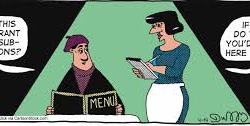
I can always start an argument with my wife by playing Scrabble with her. She’s a strict constructionist in English …
Continue reading -
Skimming, Scanning, and Illiteracy
Leave a commentAugust 22, 2016 by libroshombre
The French started using the term “desperer: to be dismayed, lose hope, despair” in the 1300s, an especially horrible …
Continue reading -
Obnubilate Zinio, Y’all
Leave a commentJune 7, 2016 by libroshombre
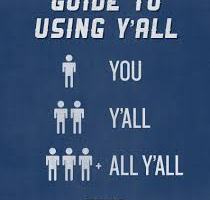
The words from TheAtlantic.com fell on my ears like manna in the desert: “How y’all doing? A greeting as …
Continue reading -
Rudeness, Cakewalks, and Library Fines
Leave a commentApril 13, 2016 by libroshombre

This era of political and cultural rudeness is certainly nothing new. In the latter 1600s French philosopher Jean de …
Continue reading -
Grammar, Style, and Nonpologies,
Leave a commentMarch 13, 2016 by libroshombre

“Many English speakers cannot understand basic grammar” was the headline of a ScienceDailyNews.com article several years ago citing research …
Continue reading -
Nonplussed Emojis Not My Fault
Leave a commentDecember 17, 2015 by libroshombre

“Mea culpa,” or “my fault,” is probably my favorite Latin phrase; at least I use it the most. This …
Continue reading -
Unstoppable Change, Ain’t Onus, and Catalog Cards
Leave a commentOctober 17, 2015 by libroshombre
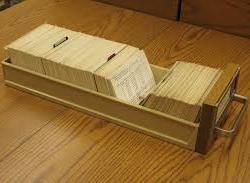
“Change,” as Benjamin Disraeli pointed out, “is inevitable. Change is constant.” Ain’t it though? There was a time when “ain’t” …
Continue reading
 Hill of Books